
The Power of Backlinks in SEO: Boosting Your Website’s Authority and Traffic

Setting the Stage: Understanding the Critical Role of Backlinks in SEO

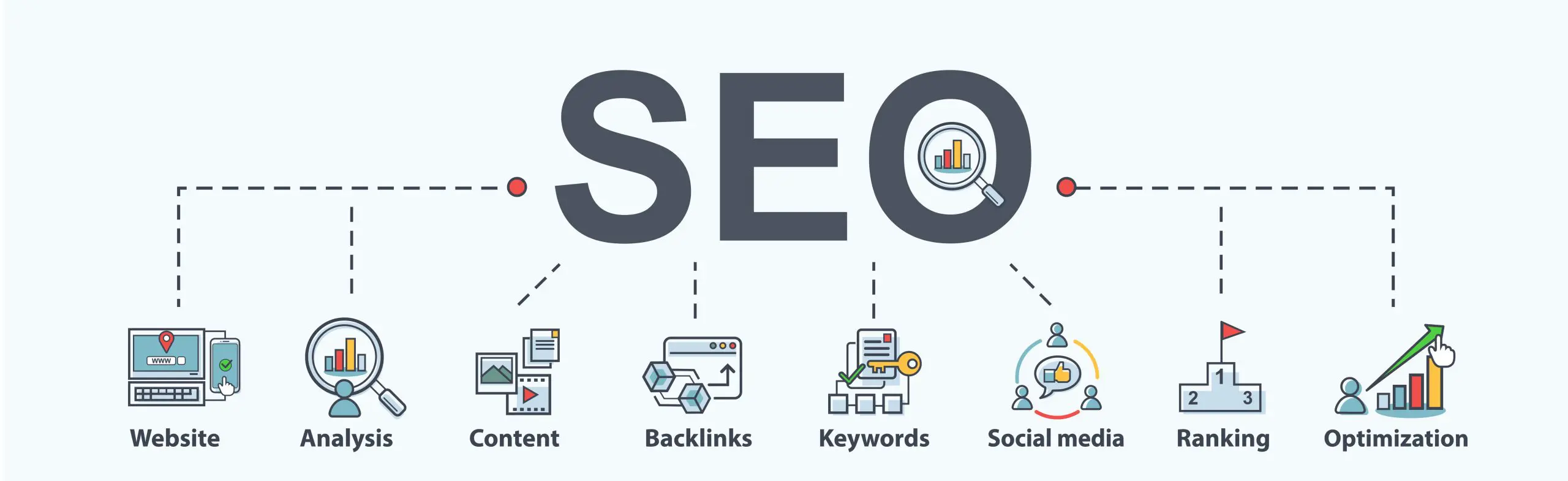
In the vast world of SEO, backlinks are golden. Often considered as one of the foundational pillars of search engine optimization strategies, backlinks are not just beneficial; they are crucial for the success of your website. This post explores the multifaceted benefits of backlinks and offers guidance on how to ethically acquire them to enhance your website’s search engine performance.

What are Backlinks?

Backlinks, also known as “inbound links” or “incoming links,” are links from one website to a page on another website. They are pivotal to the algorithm of search engines like Google, as they indicate to the search engine that others vouch for your content. If multiple sites link to the same webpage or website, search engines can infer that content is worth linking to, and therefore also worth surfacing on a SERP. So, earning these backlinks can have a positive effect on a site’s ranking position or search visibility.

  1. Improving Domain Authority

Domain Authority (DA) is a metric developed by Moz that predicts how likely a website is to rank in search engine result pages (SERPs). Websites with a high number of high-quality backlinks are generally regarded by search engines as having higher authority and are thus more likely to achieve higher rankings. Every quality link you earn delivers another small increase in your site’s authority, helping to improve your rankings.

  • Domain Authority (DA) is a metric developed by Moz, a well-known company in the SEO industry. Moz introduced Domain Authority as a way to approximate how well a website will rank on search engines. DA scores range from 1 to 100, with higher scores corresponding to a greater ability to rank. This metric is calculated by evaluating multiple factors, including linking root domains and the number of total links, into a single DA score. This score can then be used when comparing websites or tracking the “ranking strength” of a website over time. It’s important to note that Domain Authority is not used by Google and does not influence Google search rankings directly; instead, it is a Moz-specific metric.
  1. Boosting Referral Traffic

Beyond search engine optimization, backlinks have a significant advantage in terms of referral traffic. A good backlink from a highly-visited website can lead to an increase in traffic, too. If it is a relevant website, the traffic is likely also to be relevant and may lead to an increase in sales, as well. Thus, backlinks can become a great source of steady referral traffic.

  1. Enhancing Visibility and Exposure

Backlinks help your website gain exposure and find new audiences. When a website links to yours, part of their audience might be interested in checking your site out. This leads to an increase in overall visibility, which can be particularly beneficial for new websites struggling to find their initial audience.

  1. Building Relationships

The process of building backlinks often involves significant outreach to other webmasters. This outreach can often turn into more than just a one-time link; it can lead to long-term relationships. This professional networking can be beneficial for both parties, as strong partnerships can lead to new opportunities for collaboration, such as guest blogging and joint ventures.

Best Practices for Acquiring Quality Backlinks

  1. Content Creation & Promotion: Create compelling, unique, and high-quality content that people will want to reference and link to, and tell people about it. You need to get the word out before you can expect any backlink returns.
  2. Build Relationships: For good link acquisition, you need strong social skills. Make connections with other content creators and see if you can help each other out with links from relevant content.
  3. Guest Blogging: Submit blogs to popular sites in your industry, and links to your site will be included in your guest post. Make sure your content is relevant and useful to their audience so it’s more of an exchange than a one-sided affair.
  4. Look at Competitors: Stay up to date with your competitors’ backlink strategies. If they manage to acquire a backlink from a certain site, chances are you might too. Discovering where they are being linked by studying their backlink profile can provide you with potential sites that might be interested in linking to your content as well.
  5. mixing backlinks from websites with varying levels of domain authority can be beneficial for your SEO strategy for several reasons:
    1. Natural Link Profile: Having a diverse backlink profile that includes links from both high and moderate authority sites makes your link profile appear more natural to search engines. If all your backlinks come from very high authority sites, it could seem unnatural and potentially manipulative, which might raise flags with search engine algorithms.
    2. Opportunity for Growth: Lower authority sites might not provide as much immediate SEO juice as higher authority sites, but they often have their own niche audiences and can drive targeted traffic. Additionally, some lower authority sites are growing; securing your backlink there early could pay off more as they increase in authority.
    3. Broader Coverage and Reach: Mixing authorities allows you to tap into different audiences across a variety of sectors and interests, which can help increase your site’s visibility and reach different demographic groups.
    4. Risk Mitigation: Relying solely on high-authority sites can be risky, especially if those sites change their linking policies or lose authority themselves. Having a mix spreads out your risk and can provide more stability in your SEO results.

Overall, a well-rounded backlink strategy that includes a mix of domain authorities can help strengthen your SEO, enhance your credibility, and ensure more stable, long-term results.

Wrapping Up: Strategic Insights on Leveraging Backlinks for Enhanced SEO Success

Backlinks are not just beneficial; they are essential for your SEO strategy. Building a portfolio of high-quality backlinks is not an overnight endeavor—it requires diligence, patience, and a strategic approach. By focusing on quality over quantity, fostering professional relationships, and continually crafting valuable content, you can harness the power of backlinks to significantly enhance your website’s visibility and authority.

The Impact of Page Speed on User Experience and SEO

In the digital age where instant gratification is the norm, website visitors have little patience for slow-loading web pages. Page speed has become a critical factor that influences both user experience and search engine optimization (SEO). In this blog post, we will explore the profound impact of page speed on user satisfaction, conversion rates, and SEO rankings. We’ll also provide actionable tips and best practices for optimizing website performance to ensure a seamless browsing experience and improve overall website visibility.

  1. The Importance of Fast-Loading Websites

    In today’s fast-paced world, speed matters. Numerous studies have shown that slow-loading websites contribute to higher bounce rates, lower user engagement, and reduced conversions. Users expect websites to load within a matter of seconds, and anything beyond that can lead to frustration and abandonment. Additionally, search engines like Google consider page speed as a ranking factor in their algorithms, emphasizing the importance of fast-loading websites for SEO success.

  2. User Experience and Conversion Rates

    Page speed plays a crucial role in shaping user experience. When a website loads quickly, users can navigate seamlessly, access information promptly, and interact with the site’s elements without delay. This positive user experience leads to increased engagement, higher conversion rates, and improved customer satisfaction. On the other hand, slow-loading websites create a negative user experience, causing visitors to bounce back to search results or abandon their shopping carts.

    Studies have shown that even a one-second delay in page load time can result in a significant drop in conversions. For e-commerce websites, this translates into lost sales and revenue. By prioritizing page speed optimization, businesses can enhance user experience, reduce bounce rates, and ultimately boost their bottom line.

  3. SEO Rankings and Website Visibility

    Search engines prioritize websites that provide a seamless user experience, including fast page loading. Google, for instance, has explicitly stated that page speed is a ranking factor. Websites that load quickly are more likely to rank higher in search engine results pages (SERPs) compared to slower counterparts.

    Moreover, page speed indirectly affects other SEO elements. A slow-loading website tends to have higher bounce rates, shorter visit durations, and fewer pages per session, all of which can negatively impact SEO metrics. Additionally, page speed affects crawlability, as search engine bots allocate limited resources for crawling websites. If a website takes too long to load, it may hinder the search engines’ ability to crawl and index all the relevant content.

  4. Best Practices for Optimizing Page Speed

    Image Optimization

    Compress and resize images to reduce their file sizes without compromising quality. Use image formats that are optimized for the web, such as JPEG or PNG

    Minify Code

    Remove unnecessary characters, white spaces, and line breaks from HTML, CSS, and JavaScript files. Minifying code reduces file sizes and improves loading speed.

    Enable Browser Caching

    Utilize browser caching to store static resources, such as images and CSS files, on users’ devices. This allows subsequent page loads to be faster since the browser doesn’t need to fetch those resources again.

    Content Delivery Network (CDN)

    Implement a CDN to distribute website content across multiple servers worldwide. CDN ensures that users can access your website from a server that is geographically closer to them, reducing latency and improving loading speed.

    Mobile Optimization

    With the majority of internet users accessing websites through mobile devices, it is crucial to optimize your website for mobile performance. Implement responsive design, remove unnecessary elements for smaller screens, and use mobile-specific optimization techniques to improve page speed on mobile devices.

Page speed is a critical factor that significantly impacts both user experience and SEO. By optimizing website performance and ensuring fast-loading pages, businesses can provide a seamless browsing experience, increase user engagement, and improve conversion rates. Moreover, prioritizing page speed optimization positively influences SEO rankings, enhancing website visibility and organic traffic.

To stay ahead in the digital landscape, it is essential for businesses to implement best practices for optimizing page speed. This includes image optimization, code minification, enabling browser caching, utilizing content delivery networks (CDNs), and prioritizing mobile optimization. By following these strategies, businesses can create a website that loads quickly across all devices, providing a superior user experience and improving SEO performance.

In conclusion, the impact of page speed on user experience and SEO cannot be underestimated. Fast-loading websites not only enhance user satisfaction and drive conversions but also contribute to higher search engine rankings and improved website visibility. Businesses that prioritize page speed optimization gain a competitive advantage in the digital realm, as they create a positive first impression, retain users, and attract organic traffic. By implementing the best practices mentioned in this article, businesses can optimize their website’s performance and reap the benefits of improved user experience, higher conversion rates, and enhanced SEO performance. Remember, in the fast-paced online world, every second counts.

Google Guaranteed vs Google Ads: Understanding the Differences and Benefits

Google Guaranteed vs Google Ads: Which Online Advertising Platform is Right for Your Business?

In the world of digital advertising, two of the most widely used platforms are Google Guaranteed and Google Ads. Both platforms offer businesses a way to reach their target audience and generate leads through online advertising. However, these platforms differ in terms of features, benefits, and cost. In this blog, we will discuss the differences between Google Guaranteed and Google Ads, their advantages, and whether it is beneficial to run both platforms together or just one at a time.

Google Guaranteed

Google Guaranteed is a program designed for local service providers such as plumbers, electricians, HVAC technicians, home improvement contractors and other local services. The program is meant to provide customers with a sense of security when hiring a service provider by guaranteeing the quality of their work. To qualify for the program, businesses must meet certain requirements such as having a valid license and insurance, passing a background check, and maintaining a good reputation.

When a business becomes Google Guaranteed, they receive a badge on their Google My Business listing, indicating that they are a trusted provider. Additionally, their business information is displayed in a prominent position in search results, above regular organic results. Customers can book appointments directly from the search results page, and businesses are charged on a per-lead basis.

The benefits of Google Guaranteed include increased visibility, improved credibility, and a higher likelihood of generating leads. By displaying the Google Guaranteed badge, businesses can differentiate themselves from their competitors and provide customers with peace of mind. The program also helps to eliminate fake listings and scams, as only legitimate businesses are accepted into the program.

Google Ads

Google Ads, previously known as Google AdWords, is an online advertising platform that allows businesses to create and display ads on Google’s search results pages and partner websites. Businesses can choose from various ad formats such as text, image, video, and app promotion, and target specific audiences based on demographics, interests, and behavior.

Ads are displayed based on a bidding system, where businesses compete against each other to have their ads shown for specific keywords or phrases. The cost per click (CPC) is determined by the highest bidder, and businesses are charged each time someone clicks on their ad.

The benefits of Google Ads include increased visibility, targeted advertising, and measurable results. By targeting specific keywords and demographics, businesses can reach their ideal audience and improve their chances of generating leads. The platform also provides detailed analytics, allowing businesses to track their ad performance and adjust their campaigns accordingly.

Differences between Google Guaranteed and Google Ads

One of the main differences between Google Guaranteed and Google Ads is the type of businesses they cater to. Google Guaranteed is designed for local services, while Google Ads can be used by businesses of all types and sizes.

Another difference is the way businesses are charged for their advertising. With Google Guaranteed, businesses are charged on a per-lead basis, while with Google Ads, businesses are charged on a per-click basis. This means that businesses using Google Guaranteed only pay when they receive a lead, while businesses using Google Ads pay each time someone clicks on their ad, regardless of whether they make a purchase or not.

Finally, the placement of ads is different between the two platforms. Google Guaranteed businesses are displayed at the top of search results, above regular organic results, while Google Ads are displayed at the top and bottom of search results, as well as on partner websites.

Benefits of Running Both Platforms Together

While both Google Guaranteed and Google Ads offer unique benefits, running both platforms together can provide businesses with even more advantages. By combining the two platforms, businesses can increase their visibility, improve their credibility, and reach a wider audience.

For example, a local service provider that is Google Guaranteed can also use Google Ads to target customers outside of their immediate area. Similarly, a business using Google Ads can benefit from becoming Google Guaranteed by improving their credibility and standing out from competitors in their local market.

Running both platforms together can also provide businesses with more comprehensive analytics and data. By using both Google Guaranteed and Google Ads, businesses can compare their performance across both platforms and gain a better understanding of their target audience and their preferences.

Conclusion

Google Guaranteed and Google Ads are two powerful online advertising platforms that offer businesses a way to reach their target audience and generate leads. While both platforms have their unique benefits and features, running both platforms together can provide businesses with even more advantages, including increased visibility, improved credibility, and a wider reach. However, businesses should carefully evaluate their goals, budget, and resources before deciding which platform or combination of platforms is right for them. By doing so, they can maximize their return on investment and achieve their advertising objectives.

Maximizing the Impact of Google Ads with Landing Pages: How to Create Effective Landing Pages that Convert Clicks into Customers

Google Ads is an extremely powerful advertising platform that can help you reach millions of potential customers online. However, simply running a Google Ads campaign is not enough to guarantee success. In order to maximize the impact of your campaigns and turn clicks into customers, you need to create effective landing pages that are optimized for conversions.
A landing page is a standalone web page that is designed to convert visitors into customers. When someone clicks on your Google Ads ad, they will be taken to your landing page, so it is crucial that your landing page is optimized for conversions. In this article, we will discuss the key elements of an effective landing page and how to use them to maximize the impact of your Google Ads campaigns.

  1. A Clear and Compelling Headline

    The headline is the first thing that visitors will see when they arrive on your landing page, so it is essential that it is clear and compelling. Your headline should accurately reflect the message of your ad and should be attention-grabbing. This will help to keep visitors on your landing page and increase the chances of them taking action.

  2. A Strong and Relevant Message

    The message of your landing page should be strong and relevant to the message of your ad. Your message should be clear and concise, and should explain the benefits of your product or service. This will help visitors understand why they should take action and will increase the chances of them converting into customers.

  3. High-Quality Images and Videos

    Images and videos can be a powerful tool in helping to convert visitors into customers. High-quality images and videos can help to bring your message to life and can help visitors understand the benefits of your product or service. Make sure that the images and videos you use are relevant to your message and are of high quality.

  4. A Simple and Uncluttered Design

    The design of your landing page should be simple and uncluttered. This will help visitors to focus on your message and will increase the chances of them taking action. Avoid using too many colors or graphics, and make sure that your landing page is easy to navigate.

  5. A Strong Call to Action

    The call to action (CTA) is an essential part of your landing page. Your CTA should be clear and compelling, and should encourage visitors to take action. Make sure that your CTA is prominent and easy to find, and consider using action-oriented language, such as “Sign Up Now” or “Buy Now”.

  6. A Fast Loading Time

    The loading time of your landing page is critical. Visitors will not wait for a slow-loading page, and will quickly move on to a different site. Make sure that your landing page is optimized for fast loading times, and consider using a landing page builder that can help you create a fast-loading page.

  7. Mobile Optimization

    More and more people are using mobile devices to search for products and services, so it is essential that your landing page is optimized for mobile devices. Make sure that your landing page is responsive and that it looks great on all devices, including smartphones and tablets.

In conclusion, creating effective landing pages is an essential part of maximizing the impact of your Google Ads campaigns. By focusing on the key elements of an effective landing page, including a clear and compelling headline, a strong and relevant message, high-quality images and videos, a simple and uncluttered design, a strong call to action, a fast loading time, and mobile optimization, you can increase the chances of converting clicks into customers. Start optimizing your landing pages today and start seeing the results of your Google Ads campaigns improve.

Remember, your landing page is the first opportunity you have to make a positive impression on potential customers and to convert them into paying customers. By taking the time to create effective landing pages that are optimized for conversions, you can ensure that your Google Ads campaigns are as successful as possible. So, what are you waiting for? Start creating effective landing pages today and start seeing the results you want from your Google Ads campaigns.

The Bad Practice Of Keyword Stuffing

Search engine optimization (SEO) is an essential aspect of online content creation, as it helps to ensure that your content is easily discoverable by search engines and that it ranks well in search engine results pages (SERPs). However, it’s important to remember that SEO is not just about cramming as many keywords as possible into your content. This is known as “keyword stuffing” and it’s considered a bad practice that can actually harm your SEO efforts.

Keyword stuffing is the practice of including an excessive number of keywords into your content in an effort to improve your search engine rankings. This can include repeating the same keyword multiple times in a single sentence, or including irrelevant keywords that have nothing to do with the content of your page.

The problem with keyword stuffing is that it can make your content difficult to read and understand, which can harm the user experience. Additionally, search engines like Google have become sophisticated enough to detect keyword stuffing and may penalize your website for it. This can result in lower search engine rankings and less visibility for your content.

Instead of keyword stuffing, it’s important to focus on creating high-quality, relevant content that is useful and informative for your target audience. This means using keywords in a natural and appropriate way, rather than trying to force them into your content.

One way to optimize your content without keyword stuffing is to use long-tail keywords. Long-tail keywords are longer, more specific phrases that are more likely to be used by people searching for a particular topic. For example, instead of using the keyword “dog food” you can use “best dog food for small breeds” which is more specific and will attract the right target audience.

Another way to optimize your content is to include meta tags and meta descriptions. Meta tags are HTML tags that provide information about your website to search engines. Meta descriptions are short summaries of the content of a webpage that are used by search engines to understand the content of a page. By including meta tags and meta descriptions, you can give search engines more information about your website, which can help to improve your search engine rankings.

In addition to creating high-quality content, it’s also important to pay attention to other aspects of SEO such as website structure, backlinks and page loading speed. These elements can also help to improve your search engine rankings and visibility.

In conclusion, keyword stuffing is a bad practice that can harm your SEO efforts and harm the user experience. Instead of trying to cram as many keywords as possible into your content, it’s important to focus on creating high-quality, relevant content that is useful and informative for your target audience. Additionally, by using long-tail keywords, meta tags, meta descriptions, and by paying attention to other SEO aspects, you can optimize your content for search engines and improve your search engine rankings and visibility.

Strengthen Your SEO Strategy By Focusing on Keyword Intent

Everyone has likely heard of a keyword before, but some website owners don’t understand the true significance of them. When chosen correctly, SEO keywords can increase website traffic drastically and even lead to more conversions. So if you’ve been struggling to find a strategy to help you reach your goals, it might be time to consider focusing on keyword intent.

Performing keyword research is essential to strengthening your SEO strategy. People constantly go to Google to find out more information about a product or service. And if they want to find an item you sell, then the right keyword strategy will lead them to it. When you focus your efforts on SEO keyword intent, you can expect exceptional results in return. Let’s discuss in detail what keyword intent is all about and learn about the types of keywords in SEO to help your website soar up the Google search engine rankings.

What Is Keyword Intent?

When you’re performing keyword research, you have to always keep keyword intent at the top of your mind. Keyword intent is thinking about what the purpose is for the user’s search. You have to think about what the consumer is most likely to do when they search for a particular keyword or phrase. It’s arguably one of the most critical concepts to get a grasp on to elevate your website.

When you fully understand and implement a keyword intent strategy, your website landing pages and content can match a consumer’s needs. And when your website provides the answers consumers are looking for, more people will visit it. Google notices websites that are visited frequently and gives them more authority as a result. One of your main goals should be to create a website that’s used as a valuable resource for consumers to find the answers, products, or solutions they need. Once you do so, your website will be atop the Google search results in no time. This result begins and ends with your focus on keyword intent and diligent keyword research.

How To Find Keywords That Convert

Discovering the most effective keywords that convert is not a project you can do one time and don’t have to worry about again. It’s an ongoing effort of keyword research and analysis to determine what consumers are searching for at any given time. Thinking about keyword intent is a lot like thinking about searcher intent. As difficult as it may be, you have to put yourself in the shoes of a consumer and think about what they want and how they will search for what they want. Analyzing and evaluating keyword metrics is a huge part of keyword research and is literally something that can be done daily. This doesn’t mean you have to change your keywords daily, but it’s part of the overall effort to find the strongest keywords possible to help your content convert.

Four Types Of Keywords

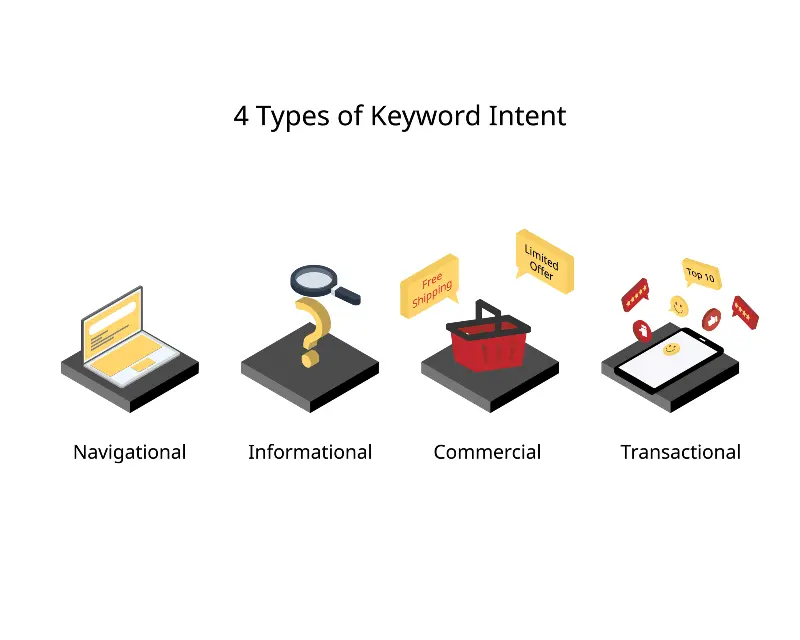
As you perform keyword research, breaking them down into several types of keywords in SEO can help narrow your focus. There are four main types of keywords commonly used in SEO:

  • Informational keywords
  • Navigational keywords
  • Commercial keywords
  • Transactional keywords

All types of keywords in SEO can be valuable in different ways. It’s critical to understand all four types when performing keyword research so they can be as impactful as possible.

Informational Keywords

Informational keywords are used when you want to provide an answer to a question searchers have or to offer general information about a topic. While informational keywords are considered to be low-intent keywords, they still can have a major impact on your digital marketing campaign. When people have questions about anything, they are most likely to turn to Google more than any other search engine or resource. So when your keyword intent strategy focuses on informational keywords, you’ll increase the chances of your website providing the answer to a consumer’s question.

A great way to pack your website with valuable informational keywords is to have a FAQ page. Google has a Featured Snippet for searches that they display at the top of the results. The Featured Snippet is what Google believes matches a consumer’s search accurately so they can find the answer they want as quickly as possible. You can maximize your website’s visibility significantly by having it on the Featured Snippet. Informational keywords can help that become a reality.

Navigational Keywords

Navigational keywords aren’t focused on a question or answer, but rather, the consumer knows what page or website they want and searches for it accordingly. As your website grows, navigational keywords will become even more important. A good example of a navigational keyword is when a user searches specifically for “YouTube.” They know exactly what they want and turn to Google to take them to it.

When implementing a strategy for navigational keywords, you have to monitor the search queries that use your company’s name or brand. Analyze your site rankings and use the appropriate navigational keywords so your website ends up on top. The landing page the consumer ends up on should provide them with the exact information they are looking for.

Commercial Keywords

Commercial keywords are used when consumers are researching or investigating different services or products. They simply want more information at this stage of their search process and might be looking for facts to support their opinions. Or they might have a clear idea of what they want to purchase but are looking for discounts, free trials, or other types of incentives to support their purchase.

Commercial keywords are interesting because they reveal a consumer’s intent to purchase something even though it might not be an immediate purchase. They might search for something like “free ice cream” or “landscaping company reviews.” Both of these examples use commercial keywords that offer great opportunities for websites to take advantage of. When you utilize them as part of your overall marketing strategy, it can give consumers the answers they need to make a future purchase on your website.

Transactional Keywords

Transactional keywords are when a searcher is intending to make a purchase or complete a specific action. These keywords need to be targeted and specific so when the user lands on the page, they can make their purchase immediately. A couple of examples of transactional keywords could be “coffee shops near me,” or “used cars for sale.” Most of the time when people use these keywords, they have already gotten the information they need and are ready to buy.

Transactional keywords can be more descriptive than other types of keywords in SEO. Consider using more details about your products as applicable, including the color, size, specific type, and more. You should spend a good amount of time on transactional keyword research because consumers are ready to buy your product or service at this stage. Precision is key and you don’t want to waste a consumer’s time by not directing them to the exact page they need to be on to make a purchase.

Organizing Keywords Is Essential To Boost Conversion Rates

So now that you know about the different types of keywords in SEO, you can put together a strategy that organizes them to maximize conversions. Your informational keywords should be a major part of your content strategy and be included throughout your web pages and blog posts. Transactional keywords should be placed on your FAQ page, instruction manuals, product descriptions, etc. to help consumers navigate your sales funnel easily. Commercial keywords are best for product pages that offer a detailed description of a product. And navigational keywords might be suited for multiple pages on your website depending on what the user is searching for.

No matter what stage you’re at with your website, it’s never too early or late to optimize your SEO strategy by focusing on keyword intent. The problem many website owners run into is they don’t have the time to implement the strategies themselves and they might not have the resources to hire a full website development team. That’s where WebNet Marketing Studio enters the picture.

Our experts at WebNet Marketing Studio can do the heavy lifting revolving around keyword research so you don’t have to. We understand keyword intent forward and backward and you can take advantage of our knowledge without hiring a full staff. When you’re ready to fully optimize your website and earn more visitors than ever before, contact us to schedule a consultation and learn how we can help.

6 Ways to Apply Hick’s Law in Web Design

Hick’s law is a commonly-cited psychological phenomenon in web design. Named after psychologist William Edmund Hick, it will illuminate your eyes to a common mistake that website masters and designers often commit without even knowing.

According to Hick’s law, the more options there are to choose from, the longer it will take to make a decision. The more bits of information there are for the human brain to process, the longer it will take to process all of them. While Hick’s law is a bit more complicated than that, that’s it in a nutshell.

It’s somewhat similar to the paradox of choice, an idea that was made famous by psychologist Barry Schwartz. The paradox of choice states that the more options a person has, the harder it is to make a decision, and the more dissatisfied and doubtful they will be with their decision. Schwartz published an entire book about it.

In any case, when applied to web design, the idea is the same. If you provide your visitors with too many options, it will make it harder for them to make a decision, and it will take them longer to do so. During the time they spend processing the many choices you have offered them, they may get distracted and leave your page without taking any action whatsoever.

Here are six ways to apply Hick’s law to web design to get more conversions and help your customers make their decisions quicker.

1. Have a Content Hierarchy and Structure

Having a content hierarchy means placing your most important content first. Some people will only put calls to action at the bottom of a page, but that’s incorrect most of the time. By the time people will have reached the end of a page, they will have been bombarded with so much information that it can become overwhelming.

However, it’s not just your call-to-action that you need to prominently place upfront. It’s also the main benefits of your product. You can expound on those benefits later, but include the basic information at the top.

However, a content hierarchy doesn’t only apply to a single page. It applies to your entire site. You want your most important pages to be at the top of the menu and more visible than others. That’s why a content structure is so important.

You can set up different menus (one for the header and one for the sidebar or footer) or divide a menu into categories and subcategories with the most critical options at the top. Furthermore, you can create parent pages and child pages to indicate the order of importance of your pages. It’s all about making it easier for your customers to understand which information is more relevant.

2. Make Your Menus Easier to Understand

I mentioned that you can add subcategories to a menu, but you don’t want to overdo it. Try to make your menus easier to understand. You can do that in several ways.

One way is to create two or more menus, as I already mentioned. You can even have a few menus in the header of your site. By dividing your menus into separate ones and making each one smaller, you can make it easier for customers to find what they are looking for – as long as they have a basic idea of which menu to look at.

It’s more than that, though. Try to use simpler words to describe your menu options, and try to use as few words as possible for each option. Not only will this make your site more mobile-friendly, but it will give people less information to process. They’ll be able to find what they need quicker, and you’ll increase user satisfaction rates.

You can also cut out some menu options altogether. Ask yourself whether those additional menu options are really necessary for increasing conversions or whether they may be producing the opposite effect.

Remember, more is sometimes better, but sometimes, more is less. More local citations and backlinks are generally better, as long as they’re high-quality, but menus aren’t like that. At a certain point, each additional menu option just makes your site more overwhelming.

3. Limit the Number of Form Fields

What applies to menu options applies to form fields. Whether it’s a contact form, email signup form, purchase form, order form, or even a feedback survey, more is often less.

The more fields you add, the more you risk customers never filling out the entire form and leaving, never to return, causing you to lose conversions. That especially applies on mobile, as it often takes people longer to type.

For example, ask yourself whether you really need someone’s physical address or phone number when they are signing up for your email list. If their address or phone number will be necessary at some point, you can ask them for that information later.

If you must include more fields, consider breaking up your form into a multipage form, with 2-4 pages. Put the easier fields first, and include a progress bar at the bottom indicating how close the person has come to completion.

That will help ensure that more people fill out the entire form due to the concept of sunken cost. In other words, after already having put in half the work, people will feel that it’s worth it to put in the other half and get the initially-desired result instead of quitting and having done the work for nothing.

4. Divide the Elements of Pages Into Groups

A great way to use Hick’s law to your advantage on landing pages and other website pages is to group similar elements together. For example, you can group your social media widgets, contact form buttons, and other similar elements together.

It’s like dividing menus into various parts. People will be able to find the group most relevant to their needs and focus on that exclusively, mentally blocking out the options in the other groups.

5. Show Limited Social Media Sites

Social media is important. It allows you to drive free traffic and engagement and build yourself up as an authority in your niche. Including links to your social media profiles on your website is a good idea, as is including social sharing buttons, so people can share your blog posts with friends and followers.

Nevertheless, you must do it wisely. Hick’s law applies here, as it does to website design in general.

Depending on your niche, some of your social sites may be more integral for driving conversions and building your brand than others. For some companies, it will be Instagram and Facebook, while for others, it will be Twitter or LinkedIn. It all depends on the industry, the nature of your business, and your target audience.

If you have a LinkedIn profile but Instagram and Facebook are your main money-makers, consider only including links to or widgets displaying your Instagram and Facebook profiles. Otherwise, people will have to spend time checking out your LinkedIn, Snapchat, Pinterest, and other profiles as well, and they may follow your less influential profiles or none at all.

The same applies to social sharing buttons. If your target audience is mostly on Twitter, for example, and doesn’t spend a lot of time on Facebook according to your market research, consider only including Twitter sharing buttons on your blog posts. That way, people won’t have to think twice and can immediately share your content.

This does not only apply to your website but to your entire online presence as well. For example, include only links to your most important social profiles in your email newsletter footer. Similarly, on your GMB profile or in your local citations, consider leaving out some social profiles.

6. Avoid Carousels and Sliders

Finally, avoid carousels and sliders. Carousels and sliders are often thought of as great ways to include more information in limited space. However, while that’s one of their strong points, it’s also one of their major weak spots. Too much information in one place can lead to negative results in the long run.

People will spend time going through each slide in the carousel, perhaps two, three, or even four times. As time goes on, they may have a harder time making a decision.

If you do need to use carousels or sliders, limit the number of slides in each carousel. Two or three should be the maximum. Even then, use carousels sparingly, and try to use them in places other than at the top of your homepage.

Final Thoughts

Your primary goal should be to make things easier for your customers, not harder. Hick’s law states that including too many options will lead to a confusing customer experience. While Hick’s law was discovered long before internet marketing, it’s an especially important rule for marketers and web designers to remember.

A/B split testing can confirm Hick’s law. If you’re hesitant to cut down on options and give your customers less information, try it! You will likely be surprised by the results.

Why Google Display Ads Are A Cost-Effective Way To Grow Your Business

You have very likely seen a Google Display Ad before and might not have realized it. These show up when people are doing online browsing, watching YouTube videos, checking their email, or even using mobile apps. If you have noticed the ads display across your devices, have you ever wondered how well those businesses do with their display campaign?

As a business owner, you should always be looking for ways to improve and expand your business. There are plenty of marketing strategies to consider, but none of them guarantee success. However, when you consider you can reach roughly 90% of internet users globally with Google Display Ads, it’s definitely a strategy worth integrating into your plans. And even better, Google Display Ads are more cost-effective than you think so you won’t have to break the bank to boost brand awareness. Here’s everything you need to know about Google Display Ads and the advantages that come along with them.

What Are Google Display Ads?

With Google Display Ads, you can increase the chances of consumers seeing your advertisement even if they aren’t searching for your services or products. They’ll simply see the ad banners on the side of the page they are viewing, whether it’s on YouTube, Gmail, or other apps. Of course, you can target the type of audiences you’re aiming to reach to maximize the number of clicks and views you get on your advertisement. You can also customize Google Display Ads to include animation, videos, or other types of images to make them more enticing. The bottom line is you have some great potential to increase brand exposure with Google Display Ads if you take advantage of the benefits.

Advantages Of Google Display Ads

Every strategy you put together and decision you make for your business should be geared toward boosting your bottom line. Google Display Ads can bring a lot of value to your display campaign and these are the main advantages to consider.

Boost Your Brand Awareness

One of the main goals of a small business owner is to find different ways to educate people about their brand. There are plenty of ways to do it, and using Google Display Ads can be a valuable part of your strategy. They give you several opportunities to connect with your target audience and can reach farther than you could imagine. Your advertisement might not be clicked on the first time someone sees it, but if they continue seeing your brand, product, or service and it’s relevant to them, chances are they’ll view it eventually since it’s something they are interested in. And many times it’s those consumers that you might not normally be able to reach any other way.

Cost-Effective Advertising

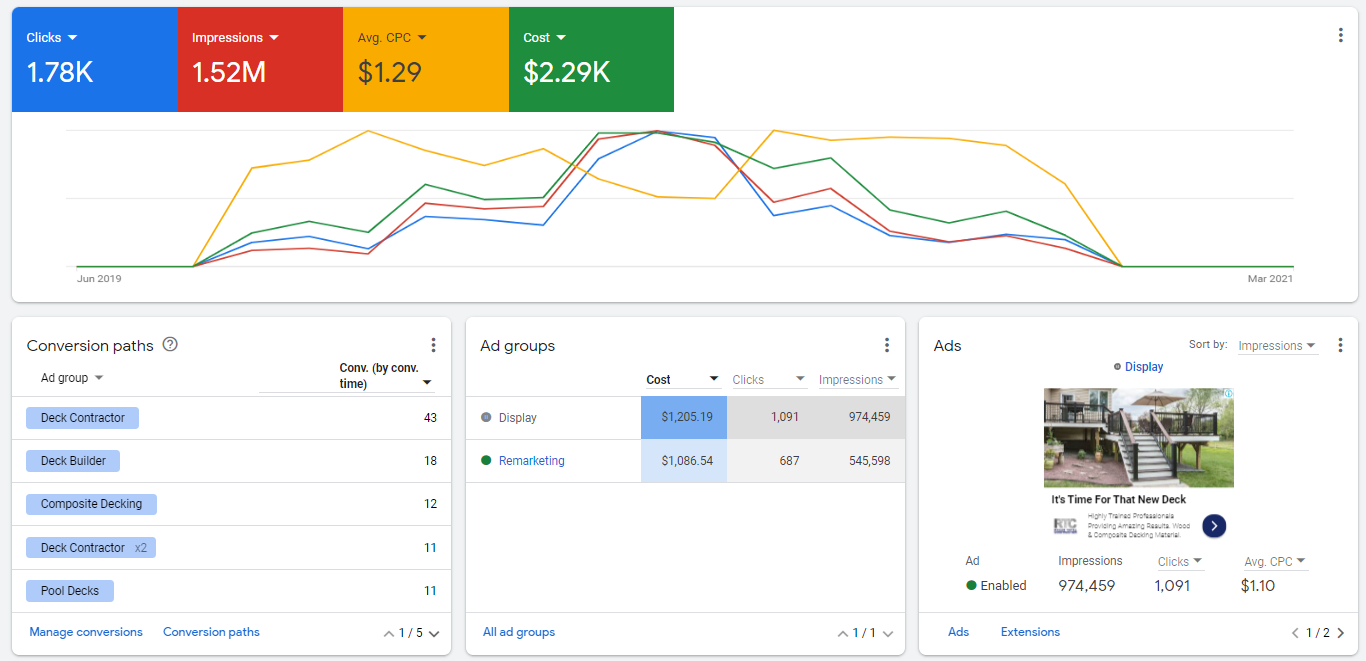
A solid ads display can sometimes cost a lot of money to the point where business owners have to look at other options. But with Google Display Ads and the right strategy, you can literally reach thousands of people for pennies on the dollar. What you’re looking for is the cost per click. The lower your cost per click, the more valuable each click will be and you won’t be exceeding your budget at the same time. The cost per click for Google Display Ads can be as little as five cents. So even if you’re on a tight budget for your display campaign, there’s a way to maximize the benefits of Google Display Ads.

Flexibility For Targeting Your Audience

Targeting your audience is essential for any type of display campaign you have. You’ll likely have more success reaching 100 interested people rather than 1,000 uninterested people. In that regard, knowing your audience is important and Google Display Ads give you plenty of options for targeting the right people at the right time and place. This is accomplished in several different ways:

  • Placement targeting – this allows you to put your ads display on websites you choose.
  • Topic targeting – this allows you to place ads on pages that have a relevant topic to your products or services.
  • Contextual targeting – this type of targeting revolves around your keywords and ensuring your ads are on web pages relevant to your selected keywords.
  • Geographic targeting – targeting people in your zip code or region is valuable for many small businesses and it’s possible to do with Google Display Ads.
  • Demographic targeting – targeting a specific gender and age might be useful and you can do it with ease with Google Display Ads.
  • Interest categories – this type of targeting lets you display ads based on the interests of your audience.
  • Remarketing – repeat visitors and customers are crucial and Google Display Ads can help drive them back to your website.

Increase The Visibility Of Your Advertisements

One thing that keeps small business owners from investing in certain types of advertising is paying for something that’s not being seen as much as they’d like. But with Google Display Ads, your advertisement will be seen by about 90% of internet users over time. That’s a percentage anyone will find valuable.

Flexible Pricing Options

Another great thing about Google Display Ads is you have a couple of different pricing options to best fit your strategy and budget. You can choose from a cost-per-click (CPC) model or a cost-per-thousand-impressions (CPM) model. Most businesses choose the CPC model where you get charged every time a person clicks on your advertisement. However, there is some value in the CPM model as well, where you get charged per one thousand views. In many ways, the CPM model is an effective way to increase your return on investment if you’re mainly looking to increase the views of your advertisements.

Ability To Add Videos To Your Ads

Adding various types of media to your ads can make them more attractive and people are more likely to look at them as a result. With Google Display Ads, you can add videos to your strategy to potentially boost your click-through rates. Videos have become an essential part of advertising over the years and an effective video can pay dividends for your business.

Can Anyone Use Google Display Ads?

Just about anyone can use Google Display Ads to take their business to the next level. However, you can’t simply create an advertisement in a few minutes and expect to get thousands of views instantaneously. When you consider the strategies listed above and ensure your advertisement is targeted and attractive, you’ll have a much better chance of boosting brand awareness.

Speak To The Consumer In Your Ads

An important and often overlooked aspect of Google Display Ads is knowing where your customer is in the buying cycle. In this regard, it’s not effective to create one advertisement for an entire display campaign. There are major differences between a person who has never heard of your brand before and a person who has visited your website previously. People who have visited your website before and come back to it might have intentions of buying a product, but chances are a person who doesn’t know anything about your brand won’t be ready to make a purchase right away. Knowing this and speaking to them depending on where they are in the buying cycle can boost conversions.

Grow Your Business In A Cost-Effective Way With Google Display Ads

Google Display Ads can help keep your brand at the top of a user’s mind. People aren’t always ready to buy a product or service when they are browsing online or checking their email. However, the more they see your brand prominently displayed on their screen, the more they’ll remember it when they do need the product or service you have to offer. Building brand awareness is key and Google Display Ads is one of the most cost-effective ways to do it.

WebNet Marketing Studio is here to help small business owners like you increase brand exposure and boost your bottom line at the same time. Google Display Ads are one of the most effective advertising strategies companies use today, as long as they are thought out and executed appropriately. We can help you with all of those details so you can focus on other aspects of your business, including taking care of your customers. To learn more about how Google Display Ads can fit into your display campaign, contact us at any time.

Why WordPress?

Should You Use WordPress To Build Your Website?

Many business owners often don’t know the first thing about building a website, but they know they have to do it to keep up with the competition. Whether you want to build a website on your own or have someone else do it for you, WordPress is a popular option you likely won’t regret choosing.

From the ease of use to the customization options and flexibility, WordPress puts you in control of your website. But even then, you can work with managed WordPress hosting companies to maintain and operate your website for you if it’s not something you want to do alone or in-house. We’ve taken a look at many different reasons why you should consider using WordPress to build your website.

WordPress Is Free To Use

For new business owners, costs are always at the top of the mind. The great thing about WordPress is you can build a professional-looking website completely free. It’s an open-source project that has existed for nearly two decades and has helped countless business owners have a solid online presence. The one thing you’ll need to consider is whether you want to learn how to host your website or if you want to outsource WordPress hosting. There are plenty of WordPress hosting services you can find with different price points based on the level of service you want them to provide. You can always start creating your website and then if you realize you don’t have as much time on your hands as you would like, you can hire WordPress hosting services at that point to take over.

The Learning Curve Isn’t Steep

While there are plenty of things you can learn about WordPress, just about anyone can learn them with some time and effort. The interface is clean and easy to follow so you could sit down one day and become accustomed to the interface just by clicking around. There are also plenty of video tutorials and written instructions online you can access to help you design your website.

One of the most valuable WordPress resources is the large community it has. No matter what question you have about WordPress, chances are someone else has had the same question and it has already been answered. You can browse through the community forums to get some ideas on how to design your website and learn so much about how to navigate WordPress at the same time.

Create Virtually Any Type Of Website With WordPress

WordPress was originally designed to be a place where people could post their blogs. It has evolved significantly since then and now you can create virtually any type of website you want. It’s still very popular for blogging, but it’s also able to work well as a forum website, business website, e-commerce website, membership sites, and much more. WooCommerce is a WordPress plugin every website owner should look into. Using WooCommerce is one of the simplest and most popular ways people can transform a basic website into a comprehensive online store. By learning a little about what WooCommerce has to offer, you can decide what type of website you want to have and turn your vision into a reality.

Include Multiple Types Of Media

Regardless of the type of website you’re trying to create, media will likely play a significant role. A website full of nothing but text won’t keep your audience engaged and you’ll have a hard time attracting new visitors. Another great aspect about WordPress is that it supports many different types of media to customize your website how you want. Whether posting informational videos, creative images, embedding documents, or audio recordings, you can accomplish them all with WordPress. Images and other media types are easy to include and move around exactly where you want them to be so you can create the exact website you want.

Customize Your Website With Numerous WordPress Plugins And Themes

A major part of WordPress you need to learn about is the available WordPress plugins and themes. In most cases, WordPress themes provide a foundation for a website owner and gives them a starting point for building their site as large as they want to. You can make tweaks to personalize the WordPress themes you choose, but a lot of the work is already done for you.

As your WordPress expertise evolves, or if you simply want to change some things on your website, you can explore various WordPress plugins. Your customers might want to see different things on your website, like a membership section, a forum, or other types of interactive media. This is when you can explore the various WordPress plugins to download and include exactly what you need on your website.

Managing Your WordPress Website Is Simple

Owning and operating a website can be intimidating for business owners who have never done it before. Everything from making sure the website loads correctly to updating security settings and everything in between can take some time to stay on top of. Luckily, it’s easy to manage your WordPress website if you want to learn how to do it on your own. However, most business owners choose to hire a WordPress hosting service to handle it for them. Some of the main things you have to manage on your WordPress website include:

  • Running frequent security checks
  • Confirming the server is up and running
  • Backing up your data and files
  • Updating WordPress themes and plugins
  • Testing links to ensure none are broken
  • Making general improvements in SEO, speed, and functionality

Managing a WordPress website is possible but not always easy to do with the other responsibilities you have as a business owner. Finding a great WordPress hosting service can ease your mind and ensure your website stays operating at a high level all the time.

SEO Is Made Simple

Search Engine Optimization (SEO) can be challenging in many ways. Another great benefit to using WordPress is it has many SEO characteristics built into the platform. Meta descriptions and title tags are important to have, and WordPress creates them for you on every page you have. If you’re not concerned with having a website that ranks at the top of every Google search ranking, then using the built-in WordPress SEO features is all you need.

However, multiple WordPress plugins can help take your SEO game to the next level. Some WordPress plugins will analyze your target keyword and show you how effectively it is being used. It evaluates keyword density, locations, titles, and everything else pertaining to SEO on any given page. The more your WordPress expertise evolves, the more attention you can focus on SEO.

You Control Every Aspect Of Your Website

The open-source aspect of WordPress means you have total control over your website. When you choose a non-open-source platform, you won’t have the flexibility to choose different themes or plugins and are at the mercy of what the platform offers. Even if you decide not to manage your WordPress website, you’ll still have the final say in what should be done to it and can make improvements at any time. Businesses evolve over time, so the ability to make quick changes to your website to satisfy your customers’ needs is important and should not be overlooked.

WebNet Marketing Studio is here to help you with all aspects of your WordPress website. We can help you decide on the various WordPress themes you want to incorporate and discuss some of the most valuable plugins to use. Our goal is to help make your vision become a reality when it comes to your website and we will make as many tweaks and adjustments as necessary to accomplish it. We can also assist with content creation and ensuring your SEO is good enough to put your website high in the search engine rankings.

No matter where you are in the process of designing and building your website, we are happy to help. Building and managing a website can be intimidating when you do it on your own, and it’s our goal to give you some comfort and peace of mind. Be sure to contact us today to learn more about our services and how we can help you take your business website to the next level.

What’s the Secret to Successful SEO?

As a small or midsize business owner, some of your biggest goals might be expanding your online footprint and increasing traffic to your website. While these may seem like easy goals to reach by simply being active on social media, there’s a lot more to it than that. By now you know how important SEO is. The good news is you don’t have to be an expert in SEO marketing to improve yours, but it could be valuable to work with an SEO company to save you some time. This is especially true if you put SEO on the backburner because there are too many other things to do with your business.

The biggest secret to successful SEO might be that there isn’t a single strategy that works for everyone. Business owners have to be willing to measure results and adjust accordingly. Combine this flexibility with knowing what goes into a great SEO strategy and you’ll be on your way to increasing visibility, conversions, and revenue. These factors all go into creating an effective SEO marketing strategy.

Select The Right Keywords

Selecting the right keywords to focus on could take some time. You have to not only think about what you believe your keywords should be, but what your customers will be searching for and what Google will determine as being relevant. Your competitors will likely be using the same or very similar keywords as you, so the hard part is finding keywords with high search volumes, but low competition. You can find keyword tools available online to help you with this and some even offer suggestions for specific keywords you might want to consider.

Once you’ve chosen the right keywords, you’ve completed half the battle. The next part is using them in the right places without overusing them. Sprinkle your keywords in content, page titles, blogs, product descriptions, headers, URLs, and more. Just be sure not to overuse them to the point where it seems obvious you are keyword-stuffing. Otherwise, Google will notice it and your SEO efforts will be used against you by lowering your search ranking.

Prioritize A Simple User Experience

It’s easy to get bogged down in the details of creating your website and spending way too much time using keyword tools rather than enhancing the user experience. Take a step back periodically and ensure your website is clear, simple, and easy for a user to navigate. Your URLs should even indicate what the particular page is all about. If website visitors can’t easily find what they are looking for or if your load times take too long, they will leave to find another website. All of these details can impact your SEO, so be sure to keep a clean and tidy website for your visitors at all times.

Website Speed Matters

One of the first things every SEO company will do when looking at your website is confirm the website speed. No one likes a slow website. If yours takes more than 3-4 seconds to load, you can expect to lose a significant number of visitors. You can take several steps to boost your website speed. It’s possible you got a little too overzealous with images or videos, so you can reduce the size or remove them. It’s also common for people to use too many plugins, which can make your website take too long to load. Keep your website speed as fast as possible and you’ll boost your SEO and keep customers on your page longer.

Create A Mobile-Friendly Website

With more people using mobile devices than ever before, it’s just as important to have a mobile-friendly website as it is to have a great website for computer viewing. Not only does it make your website look more user-friendly on mobile devices, but Google will boost your SEO ranking as well. With the busy lives people have today, people tend to perform Google searches more on mobile devices. Ensuring your website is mobile-friendly is a great SEO marketing strategy to keep in mind and a reputable SEO company can assist you if needed.

Expand Your Online Presence

A big part of SEO is how widespread your online presence is outside of your website. This includes user reviews, whether you have any backlinks to your website, social media engagements, and more. Expanding your online presence is one of the most effective ways to earn new customers since people want to see how businesses interact with others.

One of the ways you can expand your online presence is by publishing new and relevant content regularly and sharing it through multiple channels. You might also consider guest blogging on other reputable websites and using backlinks to your website. These strategies can increase your footprint and your social media following to make you appear even more credible to Google. Consider signing up for the free Google My Business tool that will help you identify and manage your online presence so you can see what areas you need to improve in.

Incorporate The Right Mix Of Images And Videos

Visuals often trigger emotional responses, which is why they have become so popular on websites today. The right mix of images and videos can be highly effective in keeping people on your website longer. However, too many of them can make your load times slower and have the opposite effect. Consider adding relevant videos about your products, company, or other information that might boost the interests of your viewers. Not only will the videos potentially make them stay on your website longer, but if they like it enough, they might share it on social media. All of these factors can lead to a better SEO ranking.

Create Content People Want To Read

Content is and will always be king when it comes to SEO marketing. Some business owners make the mistake of stuffing their content with keywords, which makes it unnatural to read. You should always write for humans rather than trying to make sure your content has as many keywords as possible. The goal is to make your website a valuable go-to resource for your customers so they won’t have to go anywhere else to get the information they need. Google recognizes this as well and you’ll improve your SEO as a result.

Focus on creating engaging and relevant content for your pages, including periodic blog posts. Always selling your products isn’t a great way to keep readers engaged. Instead, focus on problems people might have and then show how your products could be the solution. Throw in a mix of industry-related articles that might not necessarily be promoting your products just to change things up a bit and keep your audience engaged.

Use Backlinks Strategically

Using backlinks can be a very valuable SEO marketing strategy and there are many different ways to approach it. Some business owners think it makes sense to pay for backlinks, but that’s not the case for everyone. One of the most effective ways to get credible backlinks is to create relationships with other non-competing businesses and backlink to each other’s websites. Google loves backlinks, but it also has pretty strong requirements when it comes to using them. The backlinks have to be to a credible website that enhances the user experience. Simply incorporating backlinks to irrelevant websites just to say you have backlinks isn’t the strategy to take. Again, the goal is to create the best user experience possible by providing the information they came to receive.

Be Willing To Adjust Strategies

Every SEO company will tell you the biggest secret to successful SEO is the willingness to adjust strategies. You might find the perfect SEO marketing strategy for your company, but then it starts losing effectiveness over time. Instead of trying to make it work, you might have to abandon it completely in favor of another strategy. Business dynamics change and so do consumer trends. You have to be willing to monitor results and make adjustments to stay ahead of your competition and have the highest search ranking possible.

WebNet Marketing Studio can help you put together an SEO marketing strategy that works and continues to evolve. Flexibility is what we build our business on since we know every company has different goals. Whether you’re looking to expand your online presence quickly or if you are slowly getting your website strategy together, we can help. Feel free to contact us at any time to learn more about our services and how we can make your SEO efforts successful.